With Halloween coming up, a scary movie night might be on the to-do list. If a classic like "The Shining” or “Pet Sematary” is in the queue, you might notice a familiar horror trope— an “Indian burial ground” becomes a source of supernatural danger. The trope has been used in literature and movies for decades, even prompting parody, treating Native people as ghosts.
But Native creators are telling ghost stories of their own.
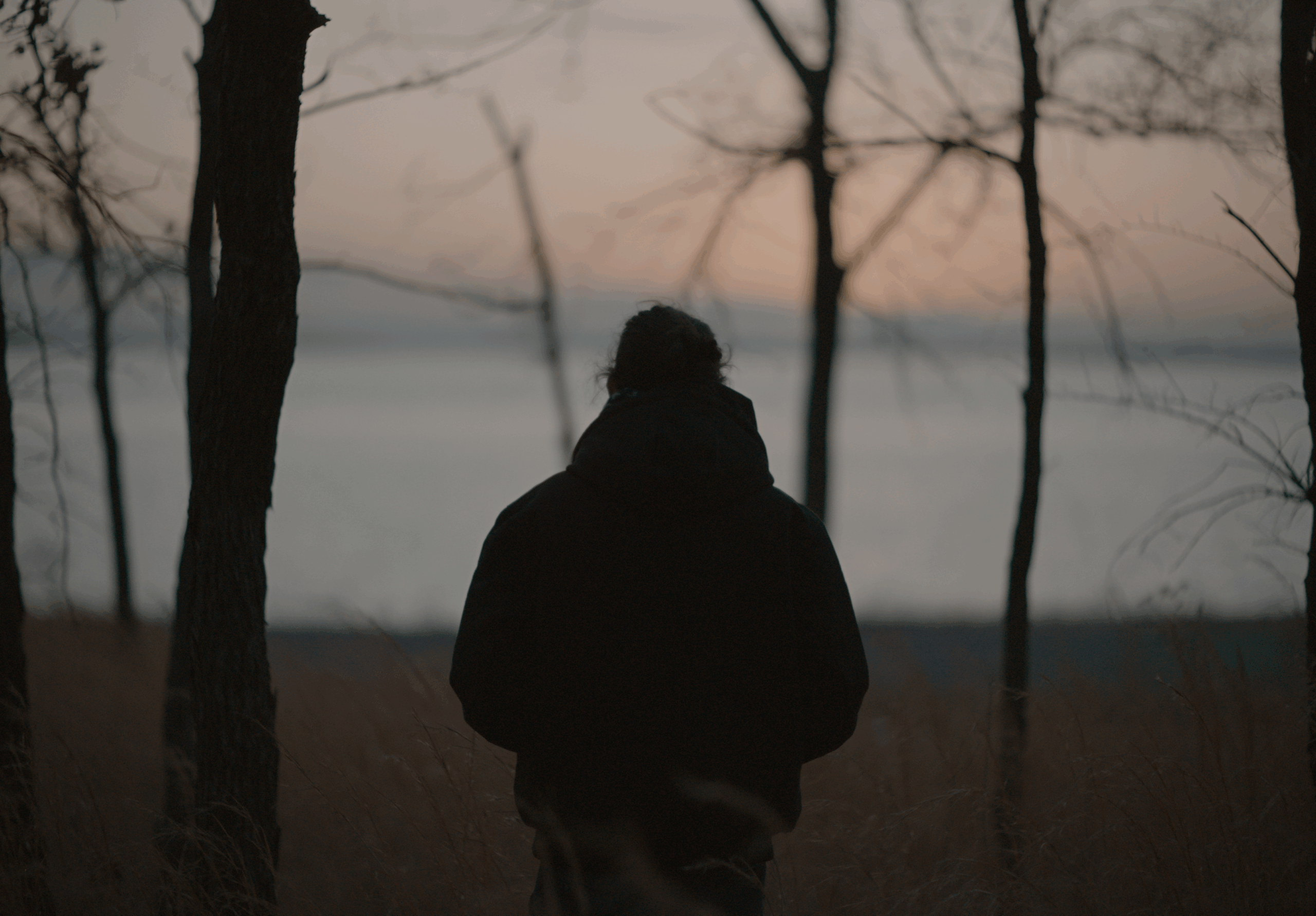
In the short film “Four Nights and a Fire,” a man grapples with grief in the winter woods.
“It's about a young Ojibwe photographer who stubbornly takes on the responsibility of keeping a sacred fire alive for four consecutive days and nights in mourning of his father,” filmmaker Alex Nystrom said. “And his father's spirit tries to reach him from the other side.”
Nystrom was born and raised in the Twin Cities and is a member of the Red Cliff Band of Lake Superior Chippewa in Wisconsin.
The film finds both fear and comfort in the idea of a spirit reaching out.
“That just creates this friction between fear and cultural practices, wanting to understand the intersection of those things. And I think that sort of becomes ripe for horror.”
His next film project, “Spiral,” expands on his short film and will be shot, in part, in Duluth and on a reservation yet to be decided.

One of Nystrom’s favorite movies is "The Shining,” the 1980 horror film about a haunted hotel.
“It just happens to include a brief plot line that the hotel is built on an ancient burial ground.”
As the unknowing family gets a tour of the hotel property, they’re told, “this site is supposed to be located on an Indian burial ground. And I believe they actually had to repel a few Indian attacks as they were building it.”
“I think that it was easy for filmmakers and non-Indigenous creatives to take those spaces and scare mainstream audiences because this country has a history of people being frightened by the Indian Wars, by Native American resistance. We were the enemies of the state,” said Deborah Jackson Taffa, the director of the master of fine arts program in creative writing at the Institute of American Indian Arts in Santa Fe, New Mexico.
Taffa is embarking on her own horror-writing journey with her upcoming novel “All the Bones Have Fallen.” She is from Kwatsaán and the Laguna Pueblo.
Taffa says Indigenous writers subvert the trope by reintroducing historical truths and drawing on their specific cultural backgrounds.
“In those stories, then, is ancestral strength because we are refusing to be silenced and erased,” Taffa said.
The trope has become so familiar that "The Simpsons” spoofed it in a 1990 “Treehouse of Horror” episode.
Writer Shane Hawk recounts that the episode “was spoofing 'Amityville Horror,’ and literally in the Simpsons' basement there's tombstones all of a sudden.”
The scene shows Lisa Simpson pointing down the basement stairs, and with eerie music, gravestones are revealed: Sitting Bull, Geronimo, Sacagawea. But also Tonto, Not So Crazy Horse and Mahatma Gandhi.
Hawk thinks the trope tries to ease guilt over past atrocities, while treating Native people as relics of the past.
“I think that’s ingrained in society. Yeah, they're all buried, they're all dead, they're just spirits now.”
Hawk is from the Cheyenne and Arapaho Tribes of Oklahoma. He wrote a book of tales about a Twin Cities suburb called “Anoka: A Collection of Indigenous Horror.”

He’s also an editor of the “Never Whistle at Night” dark fiction anthologies, which feature dozens of Indigenous writers across tribes in the United States and First Nations in Canada.
The stories draw on everything from creatures and spirits to the trauma of boarding schools and colonization — abuse at the hands of a foster parent, addiction personified, a professor with an odd collection.
Hawk says everyone can enjoy the scares, but Native readers may also recognize references that resonate in a different way.
“There's frights, and there's things that are going on, but then also there's so many references and things that Native people already know,” Hawk said. “It offers us a laugh or a smile or a head nod to something that has happened in our history.”
In Alex Nystrom’s “Four Nights and a Fire,” some may recognize the cultural practice of keeping the fire for a relative who has passed. But not everything is shown. In keeping with cultural protocol, some spiritual practices remain private. Instead, Nystrom aims for “emotional truth.”
“When the story starts to get more involved with the prayer to send off the spirit, that feels private and sacred, and that is not something that I feel the audience needs to understand or have depicted to them.”
And Nystrom hopes more Native creators will tell their own stories and expand what those stories can be.
“Just grab the pencil and rewrite the narrative that Native storytelling isn't some historical text or some wise wisdom … it can be edgy, it can be punk, it can be progressive, it can be silly, it can be ridiculous. It can be whatever we like.”
Because in these stories, Native people aren’t just ghosts — they’re the storytellers.
Collected from Minnesota Public Radio News. View original source here.
 Minnesota Public Radio (MPR) is a public radio network for the US state of Minnesota. With its three services, MPR News, YourClassical MPR and The Current, MPR operates a 46-station regional radio network in the upper Midwest.
Last updated from